
Although it would be difficult to think of a more essentially “American” film genre than the Western, filmmakers outside the United States did and occasionally continue to make Westerns of their own. In addition to the transfers of the basic “frontier” set-up to places like Canada, Australia, and Mexico, “Westerns” have been made in Spain, Italy, Germany, Turkey, Japan, India, and, in this case, Thailand. Tears of the Black Tiger might also be classified as a modern-day Western, since, judging by some of the clothing styles and weapons on display, it could be set as late as the mid-1960s, and while the film’s primary homage is to the classic Westerns of the 1940s through 1960s, there are scenes and elements that reference other genres of the same era, including musicals and big Technicolor dramas like Rebel Without a Cause.
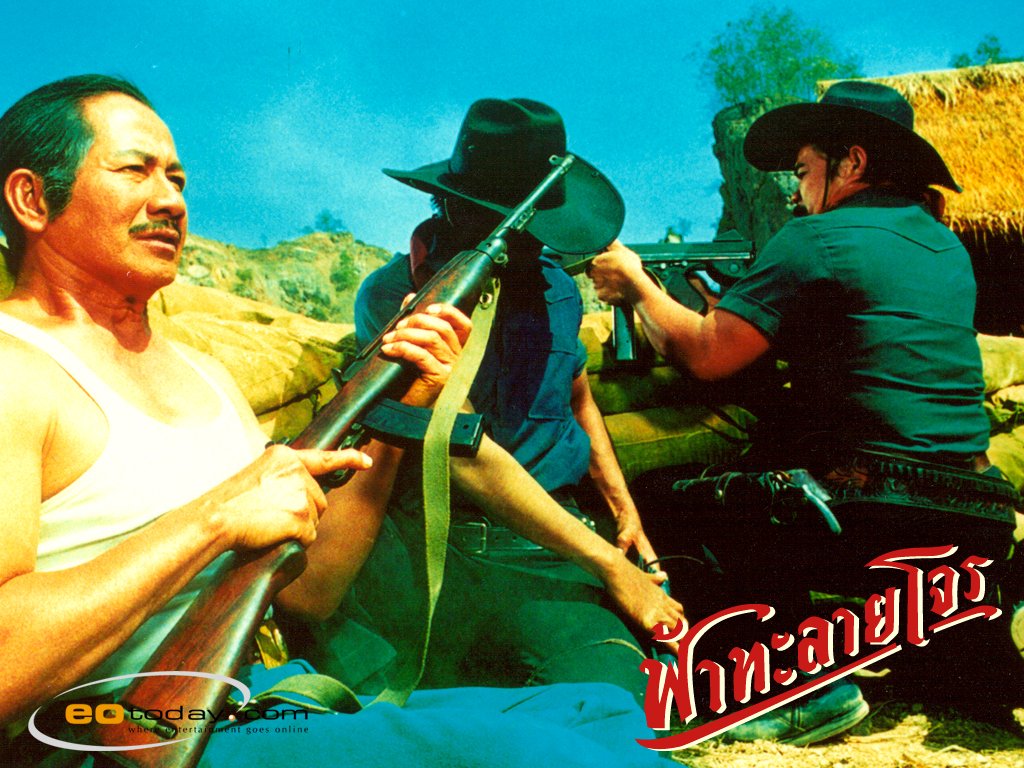
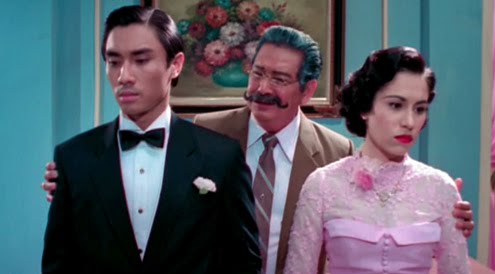
The Black Tiger (Chartchai Ngamsan) is the right hand man of bandit leader Fai (Sombat Metanee). Fai sends the Tiger along with his former right hand man, Mahesuan (Supakorn Kisuwon) to kill traitors. The Tiger completes the mission, saving Mahesuan, but the delay means he is unable to make it to a rendezvous with his childhood sweetheart Rumpoey (Stella Malucchi). Rumpoey is fleeing the marriage to a police Captain her father, the governor of the province, arranged. Rumpoey goes back to her arranged marriage, her heart broken. When the Captain attacks Fai’s headquarters, his men are slaughtered, leaving him the lone survivor. The Tiger frees the Captain when her recognizes Rumpoey’s picture. This sets in motion a final confrontation between the governor and the bandits, while Rumpoey contemplates suicide, Mahesuan suspects that his blood brother the Tiger is a traitor and the Tiger tries to warn and save Rumpoey.
"Please consider donating to Movember"
Tears of the Black Tiger is certainly a unique film, blending not only Hollywood and Italian films of the 40s-60s, but throwing in more modern touches (there is quite a bit of blood and gore in the frequent gun battles, for example) and style taken from native Thai films that are apparently little remembered even in Thailand. The film, the début of writer/director Wisit Sasanatieng takes an uneven, kitchen sink approach. At its best it is a beautiful, striking film, but a little consistency would have gone a long way. The film veers wildly from romance to melodrama to comedy to action. While most of the actors play the film straight, Kisuwon gleefully over acts, coming off something like a cross between John Wayne, a singing cowboy, a psycho from a John Woo film, and a guy camping it up with all his might. He steals every scene he’s in, and it’s not just his pencil thin mustache and matinée idol outfit doing the stealing. The older actors who play the governor and the bandit leader also get their moments of camp, though they seem to do better at matching the other actors in the scene. The mix of modern action, old Western, Thai touches, and scenes that recall films like Rebel Without a Cause and From Here to Eternity and Sirk melodramas make for a strange film, but by the end the over-the-top melodrama and musical interludes begin to drag. Still, there’s enough here to interest film fans looking for something different to make the film worth a look.
 The League of Dead Films